The telecom market is more competitive than ever. Customers expect flexible communication tools, global connectivity, and enterprise-grade features — all delivered quickly and affordably. For growing telecom providers, building a complete VoIP infrastructure in-house can slow expansion and strain resources.
That’s why many businesses are turning to white label VoIP. It enables telecom companies to launch branded communication services rapidly while relying on a proven, carrier-grade platform.
In this guide, we’ll explore the Benefits of White Label VoIP, how it supports scalable growth, and why it’s a profitable strategy for telecom businesses looking to expand services and revenue.
What Is White Label VoIP?
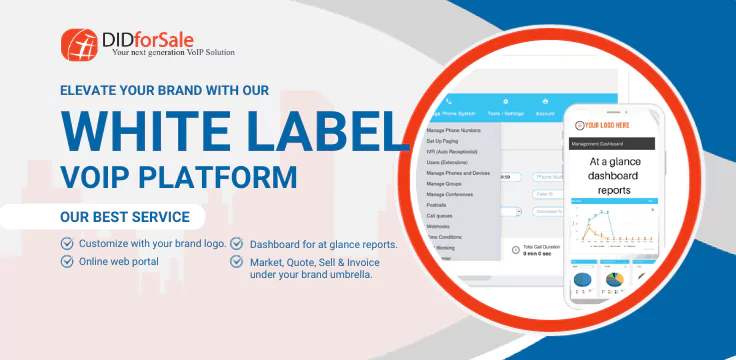
White label VoIP is a cloud-based communication solution that telecom businesses can brand and sell as their own service. The technology, infrastructure, and network management are handled by a trusted provider — while your business manages branding, pricing, and customer relationships.
Companies like DIDforSale provide the underlying infrastructure, SIP trunking connectivity, global virtual numbers, and network reliability. This allows telecom providers to deliver high-quality voice services without building or maintaining complex telecom systems.
1. Low Investment with Strong Profit Potential
One of the biggest advantages of white label VoIP is cost efficiency. Traditional telecom infrastructure requires significant investment in hardware, development, and global carrier relationships. White label VoIP removes these barriers.
Cost benefits of white label VoIP
-
No infrastructure development costs
-
No network maintenance expenses
-
Minimal upfront investment
-
Pay-as-you-scale pricing models
-
Faster return on investment
Because operational costs remain low while revenue grows through subscriptions, many telecom businesses find that white label VoIP delivers strong margins. For providers exploring expansion, the answer to “is white label VoIP profitable?” is a clear yes when paired with the right market strategy.
2. Faster Time to Market
Speed is critical in telecom. Building and deploying a new communication platform internally can take months — sometimes years. White label VoIP dramatically reduces launch time.
Telecom companies can:
-
Launch branded voice services quickly
-
Introduce new offerings without development delays
-
Expand into new markets faster
-
Start generating revenue sooner
This rapid deployment model helps businesses stay competitive and responsive to market demand.
3. Strong Branding Without Technical Burden
A recognizable brand builds trust and customer loyalty. White label VoIP allows telecom companies to deliver enterprise-grade services under their own brand identity without managing the technology behind the platform.
White label VoIP advantages for telecom companies
-
Fully branded customer portals
-
Custom pricing and service packages
-
Consistent brand experience across communication tools
-
Increased perceived business value
-
Greater market credibility
This approach allows growing telecom providers to compete with larger communication companies while maintaining full brand control.
4. Recurring Revenue and Scalable Growth
Telecom services thrive on predictable revenue streams. White label VoIP supports subscription-based pricing models that generate consistent monthly income.
Growth drivers
-
Monthly recurring revenue (MRR)
-
Easy service upgrades and add-ons
-
Flexible pricing structures
-
Scalable customer onboarding
-
Expansion without major operational increases
As customer demand grows, telecom providers can scale services efficiently without significant infrastructure investment — a major advantage for long-term profitability.
5. Access to Enterprise-Grade Communication Features
Modern businesses expect more than basic calling capabilities. White label VoIP platforms provide advanced communication features that enhance service value and customer satisfaction.
Common features include:
-
Cloud PBX functionality
-
Interactive voice response (IVR)
-
Call recording and analytics
-
Global DID numbers
-
SIP trunking connectivity
-
Call routing and forwarding
-
AI-powered communication capabilities
These features help telecom companies attract business clients seeking flexible, modern communication solutions.
6. Reduced Technical Complexity
Operating telecom infrastructure requires specialized expertise, ongoing monitoring, and compliance management. White label VoIP simplifies operations by removing the technical burden.
Infrastructure providers handle:
-
Network management
-
Platform updates and maintenance
-
Security and reliability
-
Carrier interconnections
-
Compliance standards
This allows telecom businesses to focus on strategic growth areas such as customer acquisition, service innovation, and market expansion.
7. Global Service Capabilities
White label VoIP makes global communication services accessible without physical infrastructure in multiple countries. Telecom providers can offer:
-
International virtual numbers
-
Global SIP trunking connectivity
-
Cross-border business communication
-
Cloud-based services for remote teams
This global reach enables telecom companies to serve a broader customer base and unlock new revenue opportunities.
8. Enhanced Customer Experience
Reliable communication is essential for business success. White label VoIP platforms provide stable connectivity, clear call quality, and scalable service options that improve customer satisfaction.
Customer benefits include:
-
High-quality voice communication
-
Reliable service uptime
-
Flexible communication tools
-
Scalable solutions for business growth
Improved service reliability leads to stronger customer retention and long-term business relationships.
9. Competitive Advantage in a Rapidly Evolving Market
Telecom providers must continuously innovate to stay competitive. White label VoIP enables businesses to offer advanced communication services without long development cycles.
Strategic advantages
-
Faster innovation adoption
-
Lower operational risk
-
Flexible service offerings
-
Scalable business model
-
Ability to compete with larger providers
This model empowers telecom businesses to expand capabilities while maintaining operational efficiency.
10. Ideal Growth Model for Telecom Businesses
White label VoIP is particularly valuable for:
-
Growing telecom providers
-
Managed service providers
-
IT service companies
-
Telecom resellers
-
Communication startups
By leveraging a proven platform, businesses can expand service portfolios, strengthen brand presence, and increase revenue without infrastructure constraints.
Is White Label VoIP Profitable?
White label VoIP is widely considered one of the most efficient revenue models in modern telecom. Its profitability comes from combining low operational costs with scalable, subscription-based services.
| Profit Factor | Business Impact |
|---|---|
| Low infrastructure investment | Higher margins |
| Recurring subscription revenue | Predictable income |
| Scalable service model | Growth without major costs |
| Advanced features | Premium pricing potential |
| Global service availability | Expanded customer base |
For telecom companies focused on sustainable growth, white label VoIP provides both operational efficiency and strong revenue potential.
Final Thoughts
The telecom industry is shifting toward flexible, cloud-based communication solutions. For growing providers, the traditional infrastructure-heavy model is no longer the only path to success.
The Benefits of White Label VoIP include faster market entry, lower operational costs, scalable growth, and strong brand positioning. By leveraging a reliable platform, telecom businesses can expand services, improve profitability, and compete effectively in a rapidly evolving market.
For companies looking to grow smarter — not heavier — white label VoIP offers a powerful and future-ready strategy.