A Complete Guide to Call Tracking Technology — From Dynamic Numbers to AI-Powered Insights
Every time a customer picks up the phone and dials your business, there’s a story being told. Where did they come from? What made them call? How close are they to saying “yes”? In 2026, call tracking software doesn’t just listen to that story — it deciphers, analyzes, and acts on it in real time.
No matter your industry — healthcare, SaaS, or local home services — understanding how call tracking software works is no longer optional. In fact, it’s the competitive edge that separates data-driven businesses from everyone else.
So, let’s break down the entire call tracking software process — step by step — and explore why AI in call tracking for businesses has become the game-changer of the decade.
What Is Call Tracking Software, Exactly?
At its core, call tracking software assigns unique phone numbers to different marketing channels and campaigns. When a prospect dials one of those numbers, the software instantly captures rich data. That includes which ad drove the call, the caller’s location, call duration, outcome — and in 2026, even the sentiment and intent behind the conversation.
Think of it as Google Analytics — but for your phone lines. Essentially, the call tracking software process bridges the gap between digital marketing attribution and real-world customer conversations. As a result, businesses gain a true end-to-end view of the customer journey.
How Call Tracking Software Works — Step by Step
Understanding the call tracking software process is easier when you break it into its key stages:
Step 1: Dynamic Number Insertion (DNI)
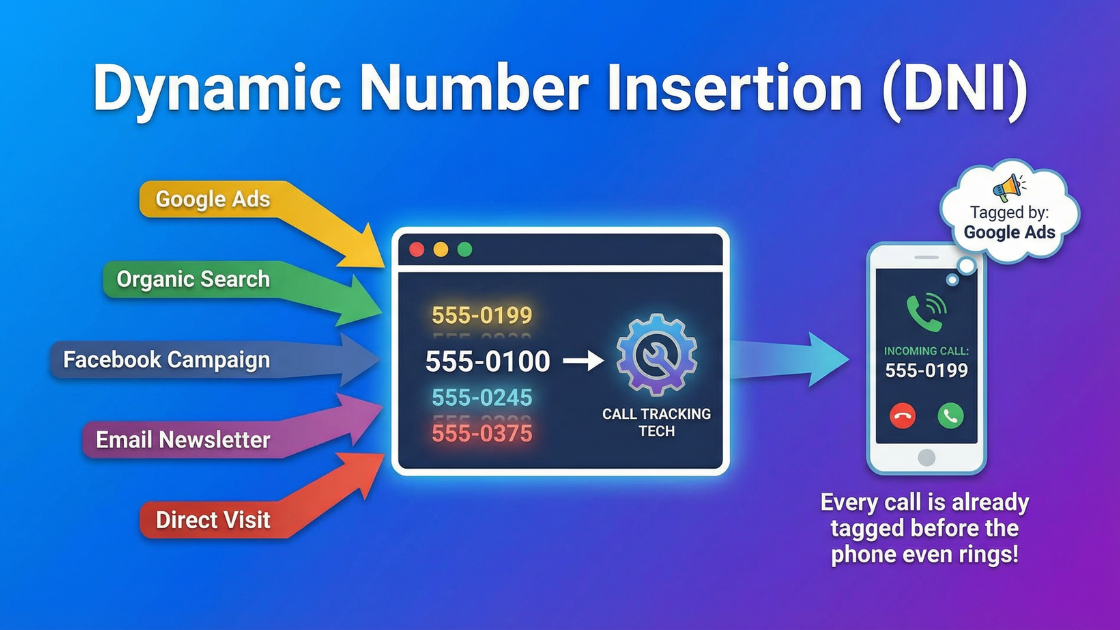
When a visitor lands on your website, call tracking technology automatically swaps your static phone number with a unique tracking number — instantly. This process is called Dynamic Number Insertion (DNI). The number displayed depends entirely on what brought that visitor: Google Ads, organic search, a Facebook campaign, an email newsletter, or a direct visit.
Consequently, every call is already tagged before the phone even rings. You know precisely which campaign earned that call before you even say “hello.”
Step 2: Call Routing and Connection
Once a prospect dials the tracking number, the call routes through the platform’s cloud infrastructure. It’s then forwarded to your actual business line — a cell phone, desk phone, call center, or IVR. From the caller’s perspective, there’s zero friction. It rings just like any other call.
Furthermore, advanced business call tracking workflow platforms like DIDforSale support intelligent routing rules. For instance, calls can be directed to different agents or locations based on time of day, caller geography, or campaign type.
Step 3: Data Capture and Session Recording
While the call is in progress, the software is already collecting data. Moreover, in 2026 this goes far beyond basic call logs. A modern call tracking platform captures:
- Caller’s phone number, location, and device type
- Source, medium, campaign, ad group, and keyword that drove the call
- Landing page and full session path before the call
- Call duration, time of day, and day of week
- Whether the call was answered, missed, or went to voicemail
- Full call recording (where permitted by law)
Step 4: AI-Powered Conversation Intelligence
Here’s where call tracking technology in 2026 truly shines. After the call — and sometimes during it — AI engines analyze the conversation to extract actionable intelligence. This is the beating heart of AI in call tracking for businesses.
Specifically, modern AI conversation analytics can:
- Transcribe the full call with speaker identification
- Detect caller intent (purchase, complaint, inquiry, cancellation)
- Score the call quality and agent performance automatically
- Flag keywords, objections, and competitor mentions
- Analyze sentiment — positive, negative, or neutral — throughout the conversation
- Identify missed opportunities and coaching moments for sales teams
Together, these capabilities transform call tracking from a passive data-collection tool into an active business intelligence engine. In short, you’re no longer just tracking calls — you’re understanding conversations at scale.
Step 5: Attribution and Reporting
All this data feeds into a centralized reporting dashboard. Marketing teams, sales managers, and executives can then view performance in real time. Additionally, with integrations into Google Ads, GA4, HubSpot, and Salesforce, call tracking software explained simply becomes a unified ROI view across every channel.
Finally, you can answer the questions that matter: “Which Google Ads campaign generates the highest-quality leads?” or “Is our Facebook traffic converting into real conversations?” The data tells the truth — even when your gut feeling doesn’t.
The Role of AI in Call Tracking for Businesses in 2026
If call tracking software was a game-changer in 2015, AI is the warp-speed upgrade it received between 2024 and 2026. Indeed, artificial intelligence has fundamentally redefined what call tracking technology can do.
Predictive Lead Scoring: AI models analyze call patterns and historical data to score inbound leads before an agent picks up. As a result, high-value prospects get instantly routed to your best closers.
Real-Time Agent Assist: During live calls, AI surfaces scripts, objection-handling tips, and next-step suggestions directly on the agent’s screen. Consequently, conversion rates rise without putting customers on hold.
Automated Follow-Up Triggers: When a caller shows strong buying intent but doesn’t convert, AI-powered workflows automatically trigger a follow-up email, SMS, or retargeting ad — keeping the prospect warm without manual effort.
Spam and Robocall Detection: AI filters out fraudulent calls and spam traffic in real time, ensuring your conversion data stays clean and your team’s time is spent on genuine prospects.
Who Needs Call Tracking Software in 2026?
The short answer: any business that receives phone calls and spends money on marketing. However, certain industries benefit disproportionately from implementing a strong business call tracking workflow:
- Healthcare & dental practices managing appointment calls
- Legal firms where each inbound call could be a high-value client
- Home services and contractors tracking local SEO and PPC campaigns
- Automotive dealerships connecting test-drive requests to ad campaigns
- Real estate agencies tracking inquiries across property listings
- E-commerce brands running omnichannel marketing campaigns
Why DIDforSale Powers Smarter Call Tracking
At DIDforSale, we’ve built our platform around a simple principle: call tracking software explained properly is more than a reporting tool — it’s a revenue accelerator. Therefore, our cloud-based infrastructure gives businesses of all sizes access to:
- Thousands of local and toll-free tracking numbers across the US and internationally
- Real-time call analytics with sub-second latency
- Seamless integrations with Google Ads, GA4, Salesforce, HubSpot, and 50+ platforms
- AI-powered transcription, sentiment analysis, and call scoring
- Advanced IVR and call routing workflows with drag-and-drop simplicity
- White-label solutions for agencies managing multiple client accounts
- STIR/SHAKEN compliance and full TCPA/HIPAA ready infrastructure
Whether you’re a growing SMB or an enterprise marketing team, DIDforSale’s call tracking technology gives you the intelligence you need to spend smarter, sell better, and scale faster.
3 Common Misconceptions About Call Tracking Software
“It’s Too Complicated to Set Up.” Modern platforms are designed for marketers, not engineers. A basic DNI setup on your website can be live in under 30 minutes with a single JavaScript snippet.
“It Confuses Customers with Different Numbers.” Customers never notice the difference. DNI happens silently on the backend — each visitor sees a consistent number throughout their session, and all calls still reach your team.
“Only Big Companies Need It.” Even if you’re running a $500/month Google Ads budget, not knowing which keywords are driving your calls means you’re flying blind. Call tracking ROI often becomes visible within the first billing cycle.
The Bottom Line: Stop Guessing, Start Tracking
By 2026, call tracking software has evolved from a niche marketing tool into a mission-critical business intelligence platform. With AI in call tracking for businesses driving smarter routing, deeper conversation analysis, and automated optimization, the ROI potential has never been greater.
The call tracking software process — from dynamic number insertion to AI-powered attribution — gives your business a complete, transparent view of what’s driving revenue. As a result, every dollar of ad spend becomes accountable. Sales calls turn into learning opportunities. Moreover, each customer interaction generates data that makes your business sharper over time.
Ready to see how DIDforSale’s call tracking technology can transform your marketing results? Explore our platform and start your free trial today — because every call you’re not tracking is a story you’ll never get to hear.