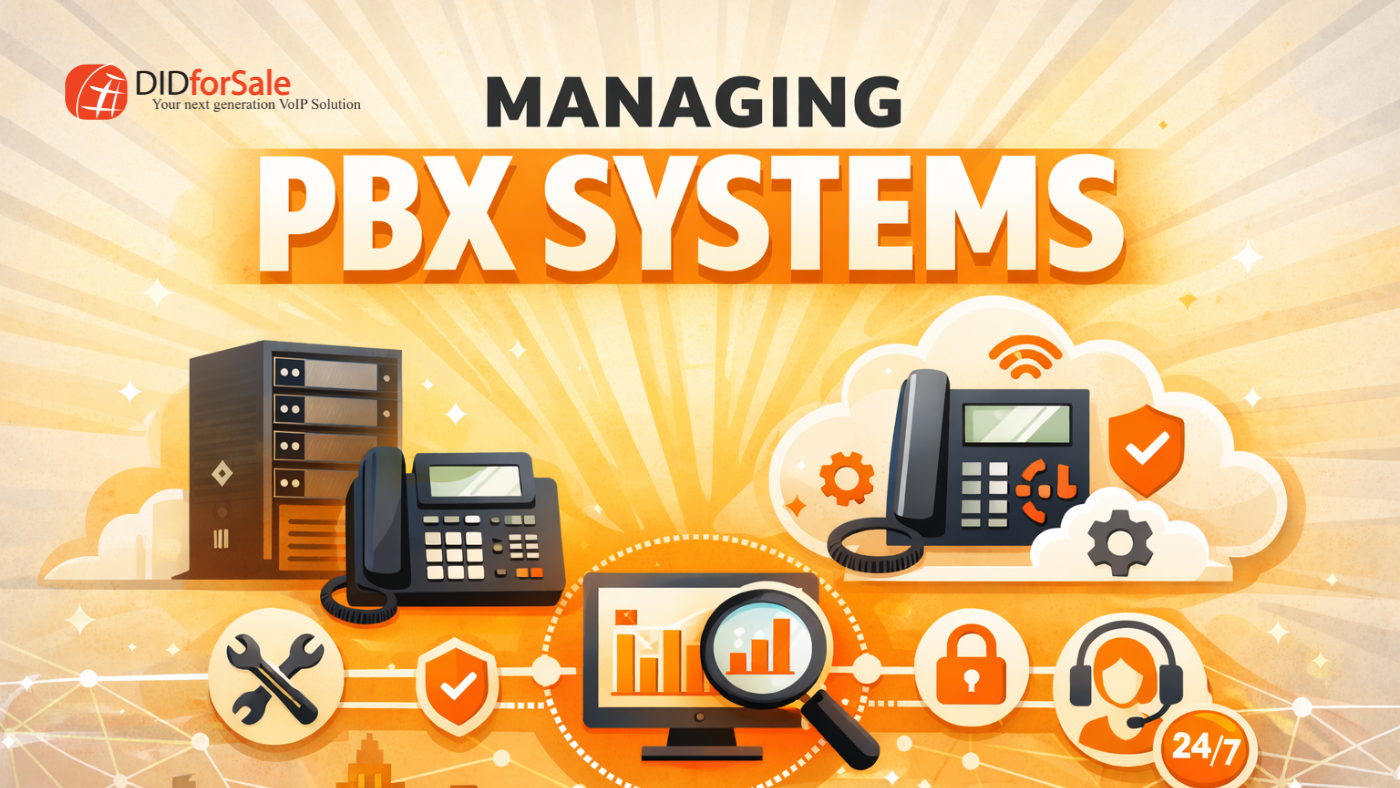
As businesses grow, communication systems often become more complex. What once worked for a small team can quickly turn into a bottleneck when call volumes increase, remote staff are added, or customer expectations rise. This is where managing PBX systems becomes a critical responsibility for IT teams and business owners alike.
Whether you operate an on-premise PBX, a hybrid setup, or a cloud-based solution, effective PBX management ensures reliable communication, consistent call quality, security, and scalability. In this guide, we’ll explore what PBX management involves, common challenges, and how modern businesses are approaching business phone system management in 2025 and beyond.
What Does Managing PBX Systems Mean?
Managing PBX systems refers to the ongoing administration, monitoring, maintenance, and optimization of a Private Branch Exchange used for internal and external business communication.
This includes:
-
Configuring extensions, call flows, and routing rules
-
Managing SIP trunks and carriers
-
Monitoring call quality and uptime
-
Applying security patches and updates
-
Handling backups and disaster recovery
-
Ensuring compliance with telecom regulations
As organizations expand, PBX system maintenance becomes more time-consuming and technically demanding, often requiring dedicated resources.
Key Challenges of PBX Management for Growing Businesses
1. Increasing Complexity
As teams scale, PBX environments become more complex. Multi-location routing, remote users, call queues, IVRs, and integrations with CRMs or helpdesk tools require constant oversight.
Without proper PBX monitoring and support, small configuration issues can quickly lead to dropped calls or missed business opportunities.
2. Call Quality and Reliability Issues
Poor call quality is one of the most common complaints tied to unmanaged or poorly managed PBX systems. Latency, jitter, packet loss, and codec mismatches can degrade customer experience.
Effective business phone system management requires continuous monitoring, traffic optimization, and reliable SIP connectivity.
3. Security Risks
PBX systems are a frequent target for fraud, toll abuse, and unauthorized access. Unpatched systems, weak credentials, and open ports can expose businesses to financial and data risks.
Strong PBX management services include firewall configuration, access controls, real-time alerts, and fraud prevention measures.
4. Maintenance and Downtime
On-premise PBX systems require hardware upkeep, firmware updates, and backup planning. Hardware failures or outdated software can result in costly downtime.
As businesses grow, maintaining uptime becomes mission-critical.
On-Premise vs Cloud PBX Management
Traditional PBX System Maintenance
Managing an on-premise PBX gives businesses full control but also full responsibility. IT teams must handle:
-
Hardware failures
-
Software updates
-
Power and redundancy
-
Security patching
-
Carrier coordination
For many growing businesses, this approach becomes resource-intensive and difficult to scale.
Cloud PBX Management
Cloud PBX management shifts much of the infrastructure responsibility to the service provider. The PBX is hosted in secure data centers, reducing the need for on-site hardware and manual maintenance.
Key benefits include:
-
Faster scalability
-
Built-in redundancy
-
Centralized management dashboards
-
Easier remote user support
-
Automatic updates and patches
This model allows businesses to focus more on operations and less on infrastructure.
The Role of PBX Management Services
Many businesses choose professional PBX management services to handle day-to-day operations while maintaining flexibility over their phone systems.
These services typically include:
-
24/7 PBX monitoring and support
-
Proactive issue detection
-
Call quality troubleshooting
-
Security monitoring and fraud prevention
-
Configuration changes and system optimization
For companies with limited internal IT resources, outsourcing PBX management can significantly reduce risk and operational burden.
Hosted PBX Solutions: A Modern Approach
As businesses plan for long-term growth, hosted PBX solutions are increasingly becoming the preferred choice. In this model, the PBX platform is fully managed by a provider, with users accessing features via IP phones or softphones.
Advantages of Hosted PBX Solutions
-
No on-premise hardware to manage
-
Predictable monthly costs
-
Built-in security and compliance
-
Seamless updates and feature enhancements
-
Easy expansion for new users or locations
For organizations focused on agility, hosted solutions eliminate much of the complexity associated with managing PBX systems internally.
PBX Monitoring and Support: Why It Matters
Proactive PBX monitoring and support is essential regardless of deployment model. Monitoring tools help detect:
-
Call failures or routing issues
-
Latency and packet loss
-
Registration problems
-
Unusual call patterns indicating fraud
With real-time alerts and analytics, businesses can resolve issues before they impact customers.
How SIP Trunking Fits Into PBX Management
SIP trunking plays a vital role in modern PBX environments. A reliable, platform-agnostic SIP trunking provider ensures compatibility with systems such as 3CX, FreePBX, Asterisk, FreeSWITCH, FusionPBX, and more.
Proper SIP trunk management improves:
-
Call quality
-
Scalability
-
Redundancy
-
Cost control
When combined with strong PBX management practices, SIP trunking provides a flexible foundation for growth.
Choosing the Right PBX Management Strategy
When deciding how to manage your PBX system, consider:
-
Internal IT expertise
-
Business size and growth plans
-
Security and compliance requirements
-
Budget predictability
-
Need for scalability and flexibility
Some businesses prefer full control with in-house PBX management, while others opt for managed or hosted models to reduce complexity.
Final Thoughts
Managing PBX systems is no longer just a technical task—it’s a strategic decision that impacts customer experience, security, and business growth. As communication needs evolve, businesses must evaluate whether traditional PBX system maintenance still makes sense or if modern approaches like cloud PBX management and hosted PBX solutions offer better long-term value.
With the right combination of SIP trunking, monitoring, and management strategy, businesses can build a communication system that’s reliable today and ready for the future.
Choosing the Right Path Forward
Every growing business reaches a point where communication infrastructure needs to evolve. Some teams prefer the flexibility and control of managing their own PBX with reliable SIP connectivity, while others decide it’s time to eliminate infrastructure complexity altogether.
DIDforSale supports businesses that want to maintain control over their PBX environment by providing platform-agnostic SIP trunking that works seamlessly with leading PBX platforms like 3CX, FreePBX, Asterisk, and more—giving IT teams the freedom to design and manage systems their way.
For organizations looking to simplify operations, our sister company Cebod Telecom offers a fully managed hosted phone service that removes the burden of PBX management while delivering enterprise-grade reliability, security, and modern calling features—all with predictable billing.
Whether your strategy is to optimize your existing PBX or move toward a fully managed solution, the right communication foundation can support growth without adding complexity.
👉 Learn more about SIP Trunking at DIDforSale
👉 Explore Hosted Phone Services from Cebod Telecom