Marketing teams spend thousands of dollars every month chasing clicks, impressions, and leads. But when a customer picks up the phone instead of filling out a form, most of that campaign data goes dark. That’s the gap call attribution closes.
If you’ve ever wondered which ad, keyword, or campaign actually drove a phone call to your business, you need call attribution. It’s the missing link between your marketing spend and your real-world results.
In this guide, we’ll break down what call attribution is, how it works with call tracking, the different attribution models available, and what to look for ?
What Is Call Attribution?
Call attribution is the process of identifying which marketing source, campaign, or channel is responsible for generating an inbound phone call. Instead of guessing whether a customer found you through Google Ads, a Facebook post, or organic search, it tells you exactly which touchpoint sparked the conversation.
Think of it as the phone-call version of website analytics. Just as you can track which page a website visitor landed on before converting, call attribution tracks which marketing effort led someone to dial your number.
This matters because phone calls remain one of the highest-value conversion points for many businesses. Callers are often further along in the buying journey and ready to make a decision. Without proper attribution, businesses miss critical insight into what’s actually working.
Call Attribution in Marketing: Why It Matters
It gives businesses the clarity to make smarter budget decisions. Here’s why it’s become essential:
- It closes the online-to-offline gap. Many customers research online but call to finalize a purchase. Attribution connects those two worlds.
- It justifies ad spend. When you know a specific campaign generated 40 qualified calls last month, you can defend or reallocate that budget with confidence.
- It improves lead quality tracking. Not all calls are equal. Attribution paired with call data helps you separate serious inquiries from spam or wrong numbers.
- It supports sales and marketing alignment. Sales teams get context on how a lead found the business, which helps tailor the conversation from the first hello.
Without it, marketers are left optimizing campaigns based on incomplete data, and that usually means wasted spend.
How Call Attribution Works
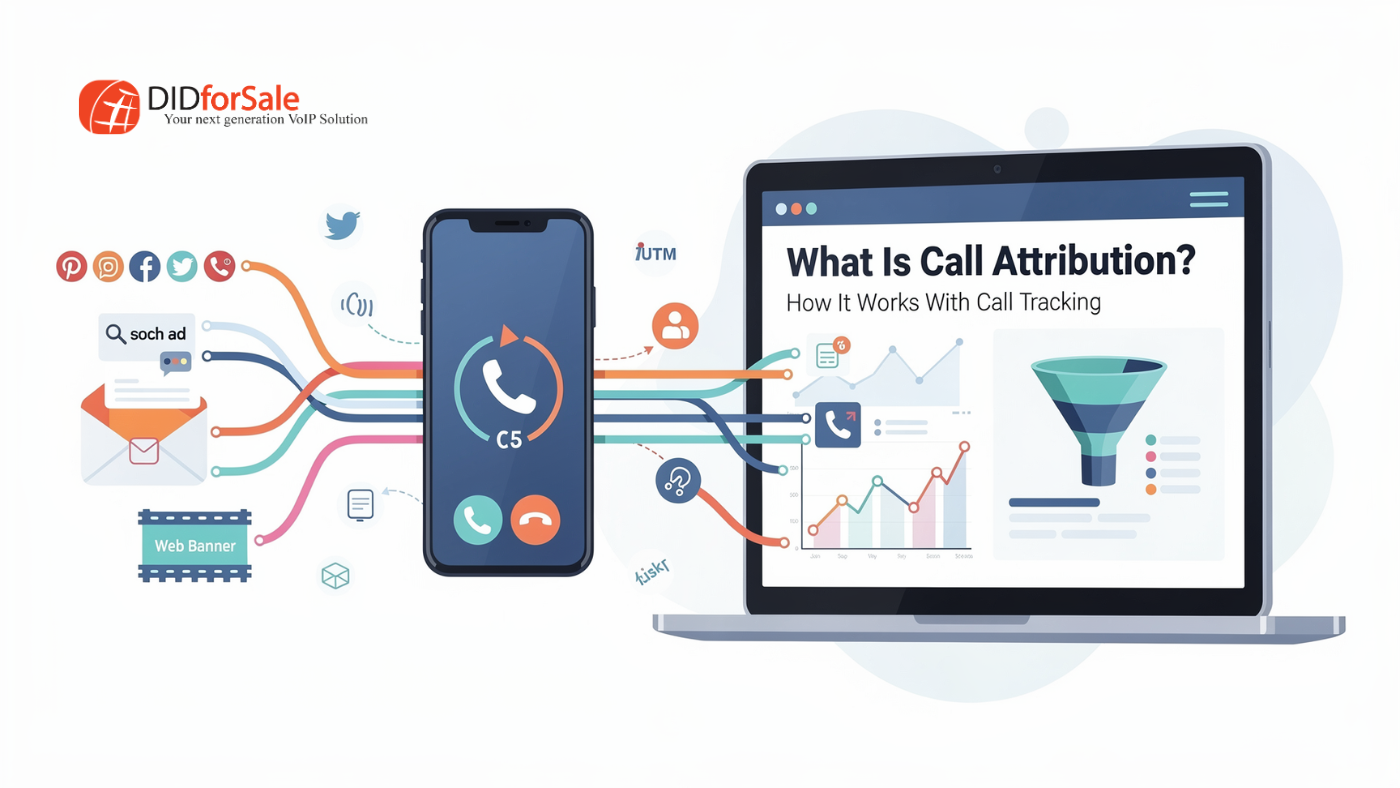
So, how does call attribution work in practice? It relies on call tracking technology to connect a phone call back to its marketing source. Here’s the general process:
- Unique tracking numbers are assigned. Each marketing channel, campaign, or even individual webpage is given a distinct phone number or uses dynamic number insertion.
- The customer sees or interacts with the tracked number. Whether it’s a Google Ads listing, a landing page, or a print flyer, the number displayed is tied to that specific source.
- The call is placed and logged. When the customer dials, the call tracking system records the number they called, along with data like call duration, time, and location.
- The system matches the number to its source. Because each number is pre-assigned to a channel, the platform instantly knows the call came from, say, a paid search ad rather than organic traffic.
- Data flows into your reporting dashboard. Marketers can then see call volume, source, and outcomes side by side with other campaign metrics.
This is where dynamic number insertion, or DNI, plays a major role. DNI displays a unique, trackable phone number for each website visitor, allowing you to trace calls back to specific marketing campaigns, keywords, or web pages. To see exactly how this technology functions, check out our detailed breakdown of dynamic number insertion for call tracking.
Call Tracking Attribution Models
Not every business needs the same level of detail. Call tracking attribution comes in a few different models, each suited to different reporting needs:
First-Touch Attribution
Credits the very first interaction a customer had with your brand, such as their first ad click or search visit. Useful for understanding what drives initial awareness.
Last-Touch Attribution
Credits the final interaction before the call was made. This model is popular because it’s simple and shows what directly triggered the conversion.
Multi-Touch Attribution
Distributes credit across every touchpoint in the customer’s journey, from the first search to the final click before calling. This offers the fullest picture but requires more sophisticated tracking software.
Time-Decay Attribution
Gives more credit to touchpoints closer to the time of the call, on the assumption that recent interactions carry more influence.
Choosing the right model depends on your sales cycle length and how many channels your customers typically interact with before calling.
Call Attribution Software: What to Look For
Not all call attribution software is created equal. When evaluating a platform, look for these core features:
- Dynamic number insertion for accurate, real-time tracking across web pages and campaigns
- Call recording and analytics to review call quality and outcomes
- CRM and ad platform integrations so attribution data flows directly into your existing workflows
- Multi-channel support covering paid search, organic, social, and offline campaigns
- Detailed reporting dashboards that break down calls by source, keyword, and location
A strong call tracking platform, like our online call tracker, combines all of these features so you’re not stitching together data from multiple tools.
Call Attribution vs. Call Tracking: What’s the Difference?
These terms are often used interchangeably, but they’re not quite the same thing.
Call tracking refers to the broader system of assigning and monitoring trackable phone numbers to capture data about incoming calls. Call attribution is a specific function within that system, the part that connects a call back to its originating marketing source.
In short, call tracking is the infrastructure, and call attribution is the insight it produces. You can’t have accurate attribution without reliable tracking in place first. For a deeper look at how the underlying mechanics work, read our guide on how call tracking works.
Why Every Business Should Prioritize Call Attribution
If your business relies on phone calls for leads, bookings, or sales, skipping call attribution means flying blind on a huge chunk of your marketing performance. It’s not just a nice-to-have. For many industries, including healthcare, home services, legal, and real estate, phone calls are the primary conversion event.
We’ve covered in detail why every business should invest in a call tracking system, and attribution is a core reason why. Without it, you can’t accurately calculate cost per lead, measure true ROI, or know which campaigns to scale.
Call Attribution Best Practices
To get the most out of your call attribution setup, keep these tips in mind:
- Assign enough tracking numbers. Don’t lump all campaigns under one number; you’ll lose the granularity that makes attribution valuable.
- Integrate with your CRM. Attribution data becomes far more powerful when paired with lead and sales outcomes.
- Review data regularly. Monthly attribution reviews help you catch shifting trends and reallocate budget quickly.
- Combine with call recording. Knowing where a call came from is useful, but knowing what happened on the call adds crucial context.
- Don’t ignore offline channels. Print ads, billboards, and direct mail can all be tracked too, so include them in your attribution strategy.
Final Thoughts
Call attribution turns a black box into a clear, actionable dataset. By connecting every phone call back to the marketing effort that generated it, businesses can finally answer the question that matters most: which campaigns are actually driving results?
If you’re ready to stop guessing and start tracking, explore DIDforSale’s call tracking solutions and see how attribution data can sharpen your entire marketing strategy. You can also learn more about how call tracking improves marketing ROI to build a stronger case for your next budget review.