If you’ve ever wondered which marketing campaign actually drove a customer to pick up the phone and call your business — you’re not alone. Marketers have long struggled to connect online activity to offline conversions. That’s exactly where Dynamic Number Insertion in call tracking steps in to bridge the gap.
In this guide, we’ll break down everything you need to know about DNI, how it works, why it matters, and how businesses can use it to make smarter marketing decisions.
What Is Dynamic Number Insertion (DNI)?
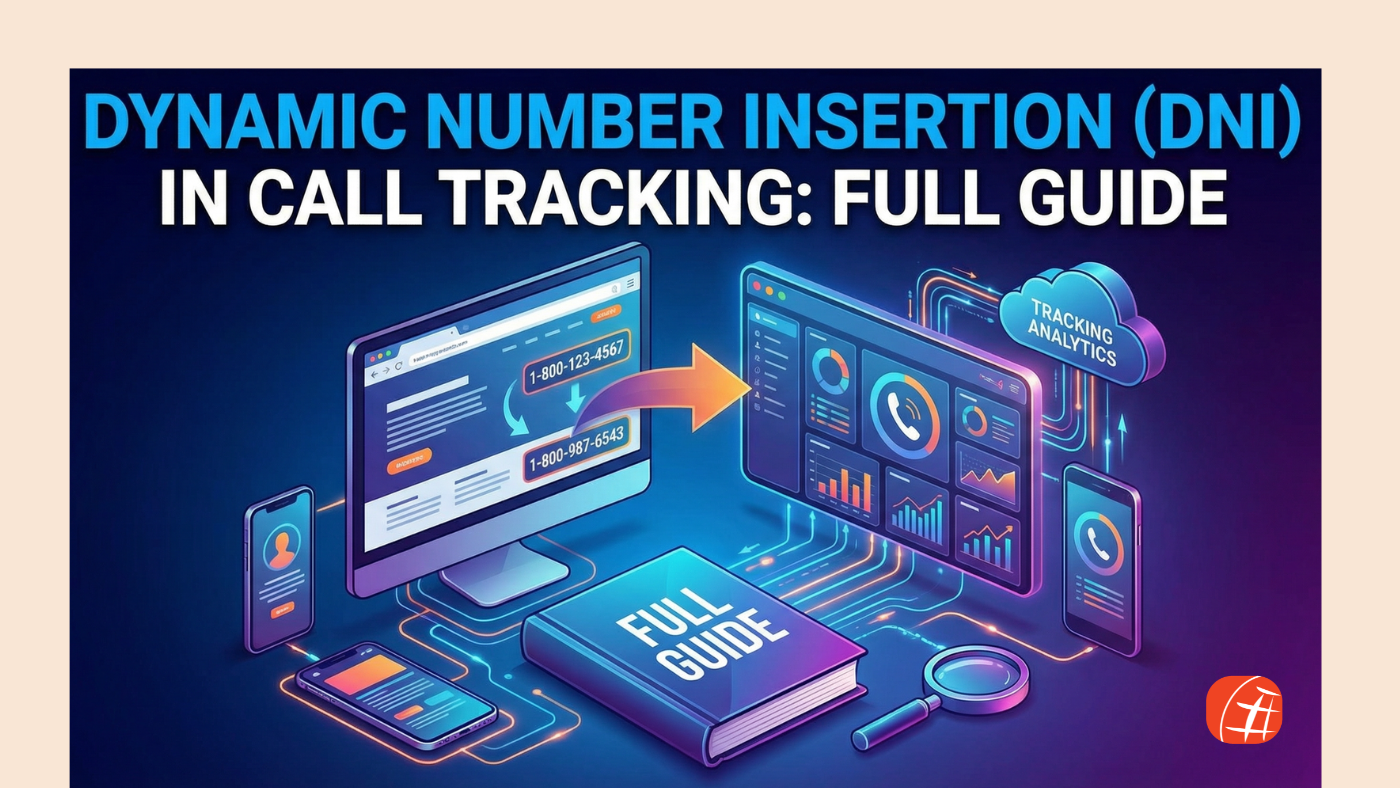
Dynamic Number Insertion (DNI) is a call tracking technology that automatically swaps the phone number displayed on your website based on how a visitor arrived at your site. Instead of showing every visitor the same static phone number, DNI shows a unique tracking number to each visitor — or each traffic source — so you can trace exactly which campaign, keyword, ad, or channel triggered the call.
In simple terms: DNI lets your phone number do the talking about where your leads are coming from.
This technology sits at the heart of modern call attribution. Whether a visitor found you through a Google Ad, an organic search, a Facebook campaign, or a direct link in an email — DNI records it all.
How Does Dynamic Number Insertion Work?
Understanding how DNI works requires a quick look under the hood.
Here’s the step-by-step breakdown:
1. A JavaScript snippet is added to your website. Your DNI software provider gives you a small piece of JavaScript code that you embed on your website — similar to how Google Analytics works.
2. A visitor lands on your website. When someone visits your site, the script fires immediately and reads the traffic source data — UTM parameters, referral URL, search keywords, ad click ID, and more.
3. The phone number swaps dynamically. Based on that data, the script replaces your default phone number with a unique tracking number assigned to that specific traffic source or session.
4. The visitor calls that number. When the visitor dials the displayed number, the call is routed to your actual business line — but the call tracking platform records every detail: source, keyword, time of call, duration, and outcome.
5. Data flows into your analytics dashboard. All that call data syncs with tools like Google Ads, Google Analytics, HubSpot, Salesforce, and more — giving you a complete picture of your marketing ROI.
It’s seamless for the caller. Powerful for the marketer.
Why Is DNI Important for Your Business?
Here’s the reality: phone calls are still one of the highest-converting lead channels, especially for industries like real estate, healthcare, legal services, home improvement, and automotive. According to industry research, phone leads convert 10–15 times more than web form leads.
Yet most businesses have zero visibility into what drove that call.
That’s a massive blind spot — and it leads to poor budget decisions.
DNI in call tracking eliminates that blind spot. Here’s why it matters:
✅ Accurate Attribution
You finally know which campaigns generate phone calls — not just clicks. Stop guessing and start optimizing based on real conversion data.
✅ Better Ad Spend Decisions
When you can see that your Google Search campaign drives 3x more calls than your display campaign, you know exactly where to shift your budget for maximum return.
✅ Keyword-Level Tracking
DNI can track calls down to the exact search keyword a visitor used before calling. This is gold for PPC optimization — you can pause underperforming keywords and double down on high-converting ones.
✅ Full Funnel Visibility
Connect your online marketing touchpoints to offline sales. DNI closes the loop between your digital activity and real-world revenue.
✅ Improved Sales Team Performance
Many DNI platforms also record calls, score them with AI, and reveal insights about what your sales team says on calls — helping you coach reps and improve close rates.
DNI Implementation Guide: How to Get Started
Getting started with DNI implementation is easier than most businesses expect. Here’s a practical roadmap:
Step 1: Choose a Call Tracking Software Select a DNI software for businesses that integrates with your existing marketing stack — Google Ads, Analytics, your CRM, and ad platforms. Look for features like session-level tracking, keyword-level data, call recording, and CRM sync.
Step 2: Define Your Tracking Numbers Decide whether you need source-level tracking (one number per channel) or session-level tracking (a unique number for every individual visitor session). Session-level tracking is more granular and accurate but requires a larger pool of numbers.
Step 3: Install the JavaScript Snippet Add the DNI script to every page of your website — ideally through a tag manager like Google Tag Manager for easier deployment.
Step 4: Set Up UTM Parameters Make sure your paid campaigns use consistent UTM tagging so DNI can correctly attribute traffic sources. This makes your data clean and actionable.
Step 5: Integrate With Your Analytics Tools Connect your call tracking platform to Google Ads to import call conversions, to Google Analytics for behavior analysis, and to your CRM to tie calls to deal pipelines.
Step 6: Analyze and Optimize Review your call tracking dashboard regularly. Look at which sources drive the most calls, which keywords convert, and what times of day generate peak call volume.
Session-Level vs. Source-Level DNI: Which Is Right for You?
There are two main DNI tracking methods:
Source-Level DNI assigns one unique number per traffic source (e.g., one number for Google Ads, one for organic, one for email). It’s cost-effective and works well for businesses with moderate traffic.
Session-Level DNI assigns a unique number to each individual visitor session. This gives you far more granular data — including the exact keyword, ad, and page path that led to the call. It’s the preferred approach for businesses running serious PPC campaigns.
For high-volume advertisers, session-level tracking is worth the investment.
DNI for Lead Tracking Across Industries
DNI for lead tracking is especially powerful in industries where the phone is the primary conversion point:
- Legal & Law Firms — Track which practice area pages and ad campaigns drive consultation calls.
- Healthcare & Clinics — Understand which services attract appointment calls and optimize accordingly.
- Real Estate — Attribute listing inquiries and buyer calls to the right marketing source.
- Home Services — Connect service estimate calls to the exact Google Local ad that triggered them.
- Automotive Dealerships — Track test drive inquiry calls back to specific vehicle campaigns.
In every case, DNI transforms vague marketing performance into precise, dollar-level attribution.
Common DNI Mistakes to Avoid
Even with the right DNI software for businesses, poor implementation can muddy your data:
- Not using UTM parameters consistently — Your tracking will have gaps if campaigns aren’t properly tagged.
- Too few tracking numbers — If you run session-level tracking but don’t have enough numbers in rotation, two visitors may share a number and corrupt your data.
- Ignoring call data in optimization decisions — Collecting the data but not acting on it is a wasted opportunity.
- Not integrating with your CRM — Without CRM sync, you can’t connect call leads to closed deals and real revenue.
Final Thoughts: DNI Is a Must-Have for Data-Driven Marketers
If you’re investing in paid search, SEO, social media, or any digital channel that drives people to pick up the phone — dynamic number insertion in call tracking is not optional, it’s essential.
DNI gives you the attribution clarity to cut wasteful spend, scale winning campaigns, and prove the real ROI of your marketing. It’s one of the most cost-effective intelligence upgrades a business can make.
At DIDforSale, we provide businesses with robust call tracking infrastructure — including virtual phone numbers, toll-free numbers, and the number pools you need to power session-level DNI at scale. Whether you’re a growing SMB or a performance marketing agency, we have the telephony backbone to make your call tracking work flawlessly.
Ready to track every call back to its source? Explore DIDforSale’s number solutions and take the guesswork out of your marketing.