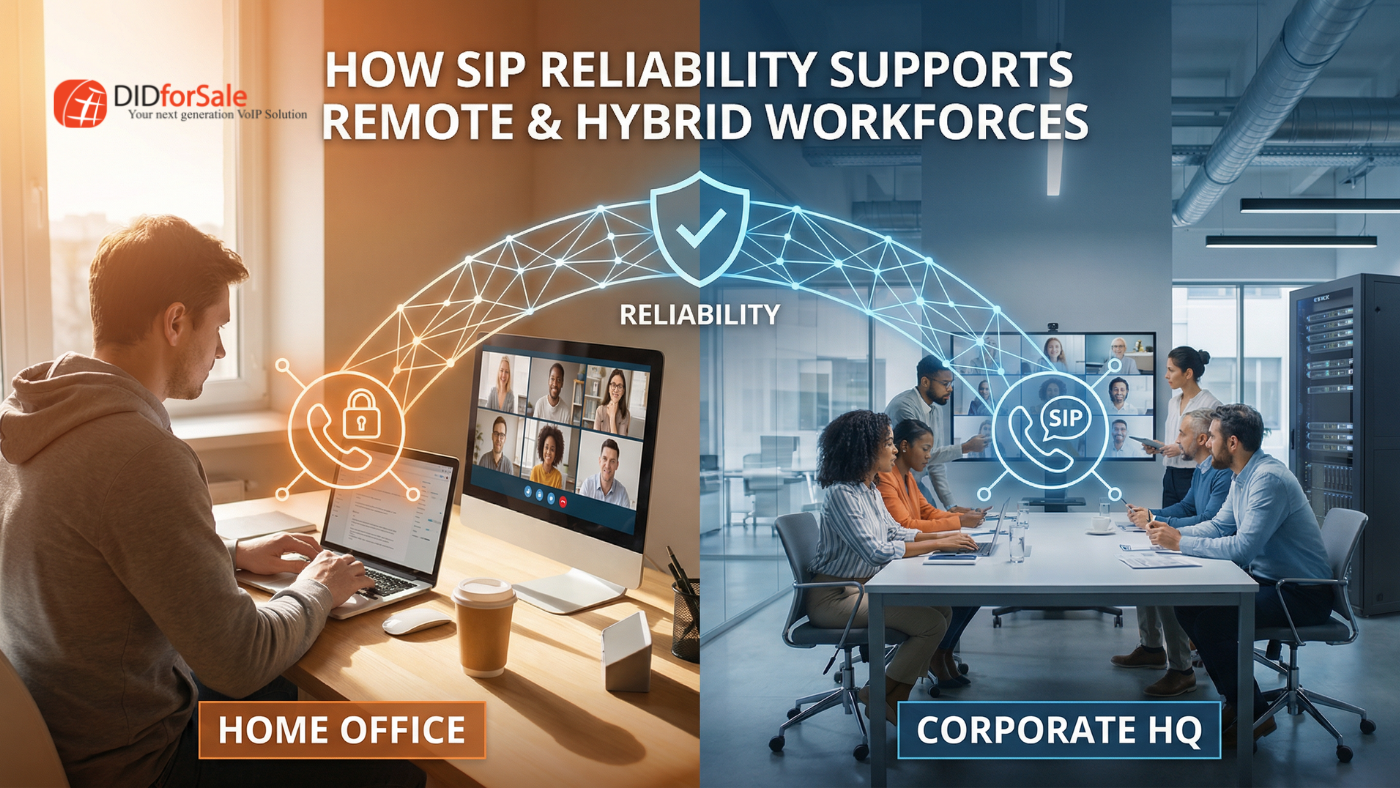
The modern workforce is no longer tied to a single office. Remote and hybrid work models have become the new standard for businesses worldwide. Teams collaborate across cities, countries, and time zones — and all of it depends on seamless communication. That’s where SIP Reliability becomes mission-critical.
A dependable communication infrastructure ensures employees can make and receive calls without interruptions, maintain productivity, and deliver consistent customer experiences. Businesses that invest in reliable SIP technology gain a strong operational advantage, especially when supporting distributed teams.
Let’s explore how SIP reliability powers remote and hybrid work environments and why it should be a priority for any organization using VoIP.
What Is SIP Reliability?
Session Initiation Protocol (SIP) is the technology that enables voice communication over the internet. It manages how calls are initiated, maintained, and terminated. However, not all SIP systems offer the same level of dependability.
SIP Reliability refers to the stability, redundancy, security, and uptime of SIP-based communication systems. A reliable SIP infrastructure ensures:
-
Minimal downtime
-
Consistent call quality
-
Automatic failover during outages
-
Secure and uninterrupted connectivity
For remote and hybrid teams, these elements are not optional — they are essential for day-to-day operations.
Why Remote & Hybrid Work Depends on Reliable SIP
When employees work from different locations, communication becomes the backbone of business continuity. Unlike traditional office environments, distributed teams cannot rely on physical infrastructure. Everything depends on internet-based communication.
1. Ensures Business Continuity
Network disruptions, ISP outages, or server failures can bring communication to a halt. Without strong SIP trunk reliability, remote teams lose access to customers and colleagues.
Reliable SIP systems provide automatic rerouting and backup paths. This means calls continue flowing even if one network path fails. For remote teams, this ensures operations never stop.
2. Supports Real-Time Collaboration
Remote work requires constant coordination. Voice communication remains the fastest way to resolve issues, close deals, and support customers.
Reliable VoIP for remote teams delivers:
-
Clear voice quality
-
Low latency
-
Stable connections
-
Consistent call routing
When calls are reliable, teams collaborate more efficiently and confidently.
3. Improves Customer Experience
Customers expect businesses to be reachable at all times. Missed calls or poor audio quality directly impact trust and satisfaction.
High SIP reliability ensures:
-
Calls connect instantly
-
No dropped conversations
-
Professional call handling
-
Continuous availability
For customer-facing teams working remotely, reliability directly influences brand reputation.
Key Technologies That Enable SIP Reliability
Reliable communication does not happen by accident. It is built through smart infrastructure design and redundancy planning.
SIP Failover Solutions
SIP failover solutions automatically redirect calls when the primary connection fails. Instead of calls dropping, they are rerouted through backup routes or alternate endpoints.
Benefits include:
-
Zero service interruption
-
Automatic disaster recovery
-
Continuous inbound and outbound calling
-
Protection against network failures
Failover is the safety net that keeps remote teams connected during unexpected disruptions.
SIP Redundancy Setup
A strong SIP redundancy setup uses multiple servers, routes, and network paths to ensure uptime. If one component fails, another instantly takes over.
Common redundancy strategies include:
-
Multiple SIP servers
-
Geographic routing diversity
-
Backup internet connections
-
Load balancing
This layered approach ensures communication remains stable regardless of technical issues.
High Availability SIP Trunking
High availability SIP trunking is designed for businesses that cannot afford downtime. It distributes call traffic across multiple infrastructure points to eliminate single points of failure.
Advantages include:
-
Maximum uptime
-
Consistent performance
-
Scalability for growing teams
-
Improved call handling capacity
For organizations with remote agents or global teams, high availability trunking is essential for uninterrupted operations.
Secure SIP Connectivity
Security is another pillar of SIP reliability. Remote teams often connect from different networks, making them more vulnerable to threats.
Secure SIP connectivity protects communication through:
-
Encrypted voice traffic
-
Authentication protocols
-
Firewall compatibility
-
Fraud prevention measures
Reliable communication must also be secure communication. Without security, uptime alone is not enough.
How SIP Reliability Boosts Remote Workforce Productivity
Reliable communication does more than prevent downtime. It actively improves how teams work.
Faster Decision-Making
When communication channels are stable, teams resolve issues quickly. There are no delays caused by call drops or poor connections.
Reduced IT Burden
Reliable systems reduce troubleshooting and support requests. IT teams spend less time fixing communication issues and more time optimizing infrastructure.
Increased Employee Confidence
Remote employees perform better when they trust their tools. Reliable communication removes frustration and supports smooth workflows.
Better Scalability
As remote teams grow, reliable SIP infrastructure easily scales to support new users, locations, and call volumes.
Why Businesses Choose Reliable SIP Trunk Providers
Not all providers deliver the same level of performance. Businesses supporting hybrid teams require providers that prioritize stability and uptime.
A high-quality provider offers:
-
Redundant network architecture
-
Intelligent call routing
-
Global connectivity
-
Real-time monitoring
-
Enterprise-grade security
Choosing a provider focused on SIP trunk reliability ensures communication infrastructure grows alongside business needs.
Real-World Impact on Hybrid Work Models
Hybrid workplaces combine in-office and remote employees. This model requires seamless connectivity between locations.
Reliable SIP enables:
-
Unified communication across teams
-
Consistent call experience regardless of location
-
Smooth transition between office and remote work
-
Centralized call management
Without reliable SIP, hybrid work environments face fragmented communication and operational inefficiencies.
Best Practices to Improve SIP Reliability
Organizations can strengthen their communication infrastructure by following proven strategies.
Implement Redundant Network Paths
Multiple connectivity routes ensure communication continues even if one path fails.
Use Automatic Failover
Failover systems prevent call loss during outages.
Monitor Network Performance
Continuous monitoring detects issues before they affect users.
Prioritize Security
Secure systems prevent disruptions caused by cyber threats.
Partner With a Reliable Provider
A dependable SIP provider delivers built-in reliability features without complex setup.
The Strategic Advantage of SIP Reliability
Reliable communication is no longer a technical feature — it is a business strategy. Organizations that invest in robust SIP infrastructure gain measurable benefits:
-
Higher employee productivity
-
Better customer satisfaction
-
Stronger business continuity
-
Scalable remote operations
-
Competitive market positioning
For companies embracing remote and hybrid work, SIP Reliability is the foundation of consistent, professional communication.
Final Thoughts
Remote and hybrid work are here to stay. As teams become more distributed, communication systems must become more resilient. Businesses cannot rely on unstable connections or outdated infrastructure.
By implementing high availability SIP trunking, SIP failover solutions, and a robust SIP redundancy setup, organizations ensure seamless communication across all locations. Combined with secure SIP connectivity, reliable SIP infrastructure supports productivity, protects operations, and delivers exceptional customer experiences.
For companies seeking reliable VoIP for remote teams, investing in SIP reliability is not just a technical upgrade — it is a long-term business advantage.